
On the go? Listen to a voice recording:
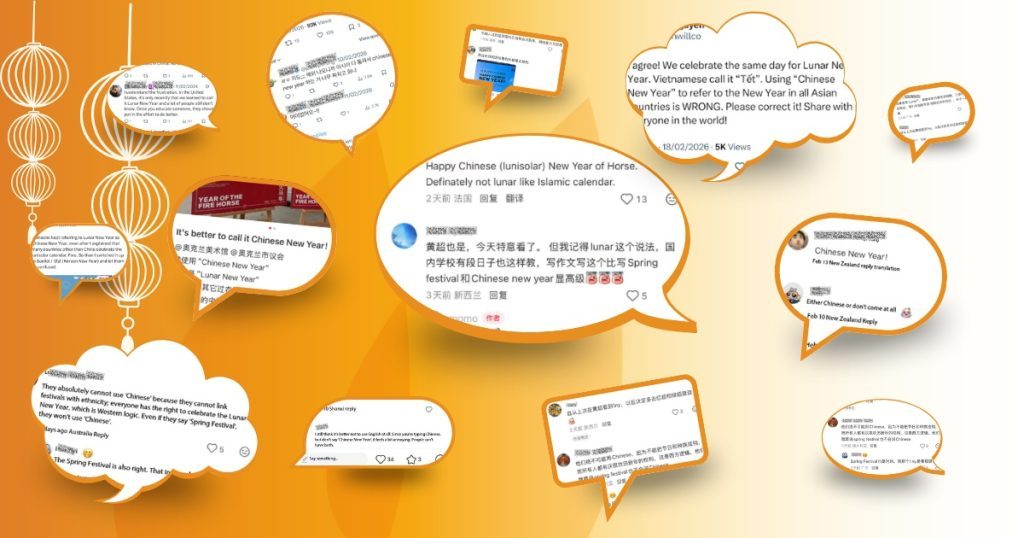
Every year, as the festive season approaches, organisations across Aotearoa (and the world!) grapple with what to call one of the most widely celebrated cultural holidays in our region. And while the intention is often inclusivity, the result has increasingly been confusion and, in many cases, offence.
The truth is, the way forward doesn’t need to be complicated.
In fact, it can be wonderfully simple. However, let’s outline the issue first.
The Debate: Why the Name Matters
Across different cultures, the New Year is celebrated according to different calendars: lunisolar, lunar, and solar. Chinese, Vietnamese, Korean and Jewish communities follow lunisolar calendars; Islamic communities follow a lunar one; Western societies follow the Gregorian calendar. These differences and nuances are not necessarily widely understood.
Online discussions, including many right here in Aotearoa, show how emotionally charged this has become. In several NZ-based Chinese community groups, shoppers have expressed frustration when local brands post in Chinese but avoid the term Chinese New Year, opting instead for “Lunar New Year.” Some described it as insincere; others said it felt like the brand was trying to “please everyone” while pleasing no one. A few even said they would take their business elsewhere.
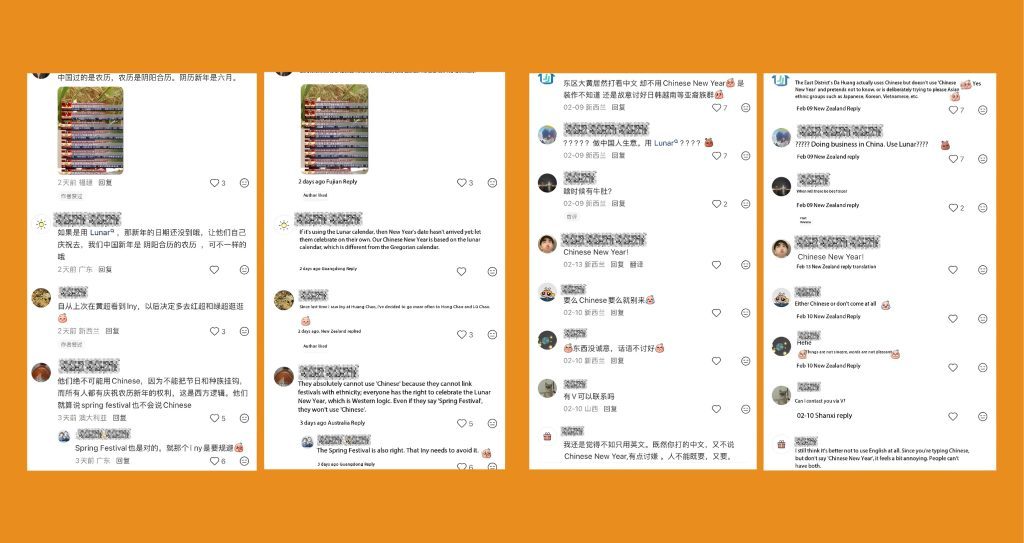
In another thread, a New Zealand shopper said that seeing Lunar New Year in a supermarket promotion instantly made them lose interest in buying anything. For them, it wasn’t about politics; it was about feeling unseen in a country they call home.
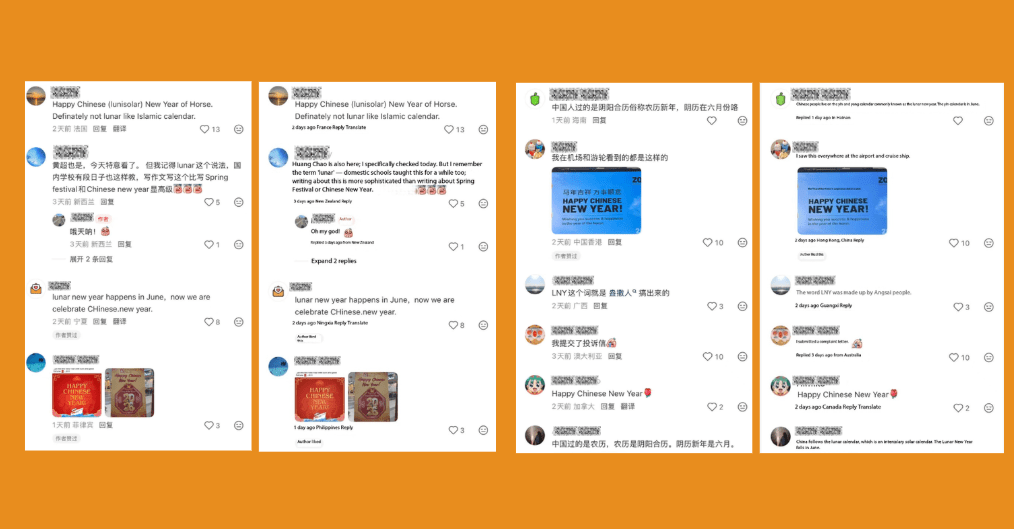
On the other hand, while we do not see the same level of public debate from Vietnamese or Korean groups in New Zealand, it is important to recognise that Vietnamese and Korean communities have their own sensitivities, but for the opposite reason. Their frustration arises when their cultural celebrations are labelled only as “Chinese New Year,” which excludes them.
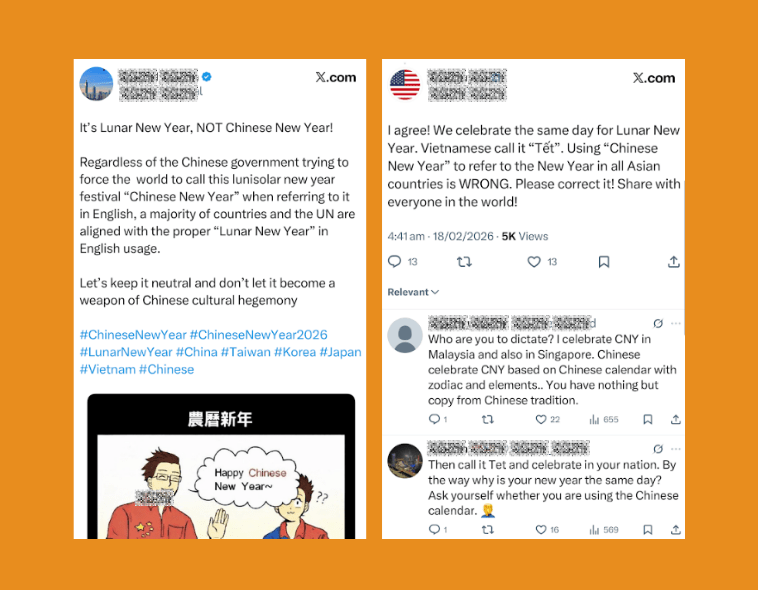
For example, some Vietnamese users insist that their celebration should be called Tết, not “Chinese New Year,” While Korean voices express similar concerns and in one widely shared post, a Korean user said they now refuse to buy diaries or planners that label the holiday as “Chinese New Year,” explaining that they often see all Asian cultures lumped together under the Chinese label. Others echoed the sentiment, saying it feels dismissive when their own celebration, Seollal, is overlooked or misnamed.
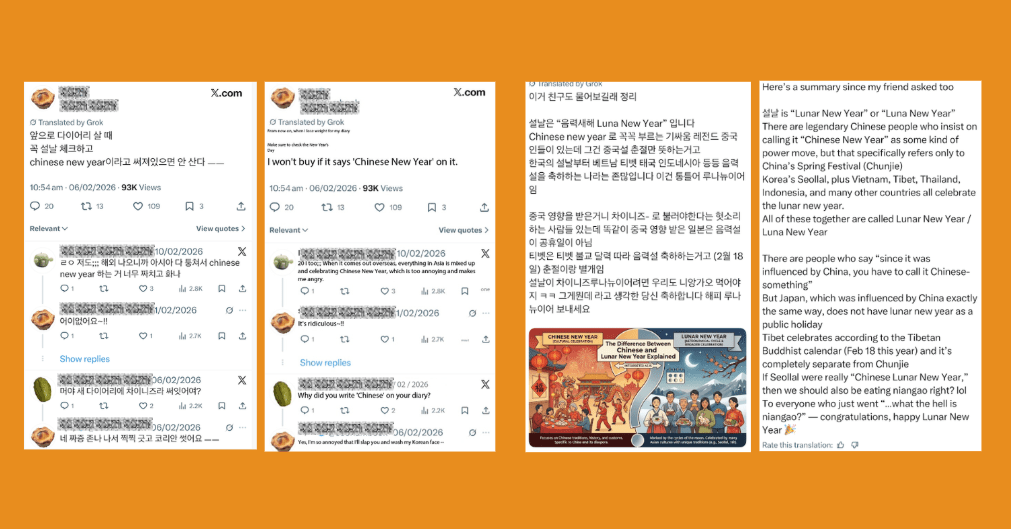
These reactions highlight a simple truth:
Language shapes relationships, and when organisations choose words and terms without cultural understanding, they risk alienating the very communities they intend to acknowledge.
So, what is the solution that that is acceptable to all?
You’ll be pleased to know that the answer is very simple!
Most people understand that different races and cultures have different New Years. That’s why the most inclusive and culturally accurate greeting is often the most straightforward one:
Just “Happy New Year.”!
It acknowledges the moment without erasing anyone’s identity or traditions.
For those who want to acknowledge the new year more specifically, there is an even better option that honours the cultural origins of the festival while embracing the diversity of those celebrating it.
Wish people “Happy Year of the Horse” (or whichever zodiac applies that year).
This is ideal because:
- 11 out of the 12 zodiac animals are shared across Chinese, Vietnamese and Korean traditions
- It avoids the inaccuracies of generic terms like “Lunar New Year”
- It celebrates the cultural heritage of the festival without assuming a single ethnicity
The only exception is the Year of the Rabbit, which becomes the Year of the Cat in Vietnamese tradition, while still remaining Year of the Rabbit for the Chinese and Koreans. That difference will next occur in 2035 (which is in the distant future) and in that single year, the simplest and most respectful option is to return to: “Happy New Year!”
What Does the UN Actually Call It?
There’s a common belief circulating online that “the United Nations officially calls it Lunar New Year.” In reality, the UN’s cultural arm UNESCO formally recognises the festival under a very different name: Spring Festival (Chinese) in December 2024. When UNESCO added the celebration to its Intangible Cultural Heritage list, it explicitly described it as China’s Spring Festival and highlighted its role in Chinese identity, continuity and tradition. The broader UN system does not impose a universal name such as “Lunar New Year,” and the only official terminology within the UN’s cultural heritage framework is “Spring Festival (Chinese)”. This reinforces that the celebration is culturally specific, not generic. Source
In conclusion, for a path toward genuine inclusion, when speaking directly to Chinese audiences, the term Chinese New Year is accurate, respectful and culturally grounded.
When speaking across cultures, Happy New Year or Happy Year of the [Zodiac] is the simplest, most inclusive option.
This approach respects everyone without erasing anyone.
It acknowledges cultural origins.
It avoids unnecessary conflict.
And it gives brands and organisations a clear, accurate and inclusive way to communicate.
Happy New Year!
Interested in exploring how Marketing Minds can help your brand engage multicultural audiences more effectively? Contact our team to start your next campaign conversation.
*The client’s name has been hidden to protect the company identity
If you want to find out more about branding and marketing, or if you have any other questions, call us at +64 9 634 4390, email info@marketingminds.me or contact us.
Enjoyed this article and want more? Sign up now to our marketing snippets!